
Should You Buy the .com and Just Redirect It to Your Real Site?
Thinking about buying the good .com and pointing it at your current site? Here's when a redirect is smart, when it falls short, and what it actually does for getting found.
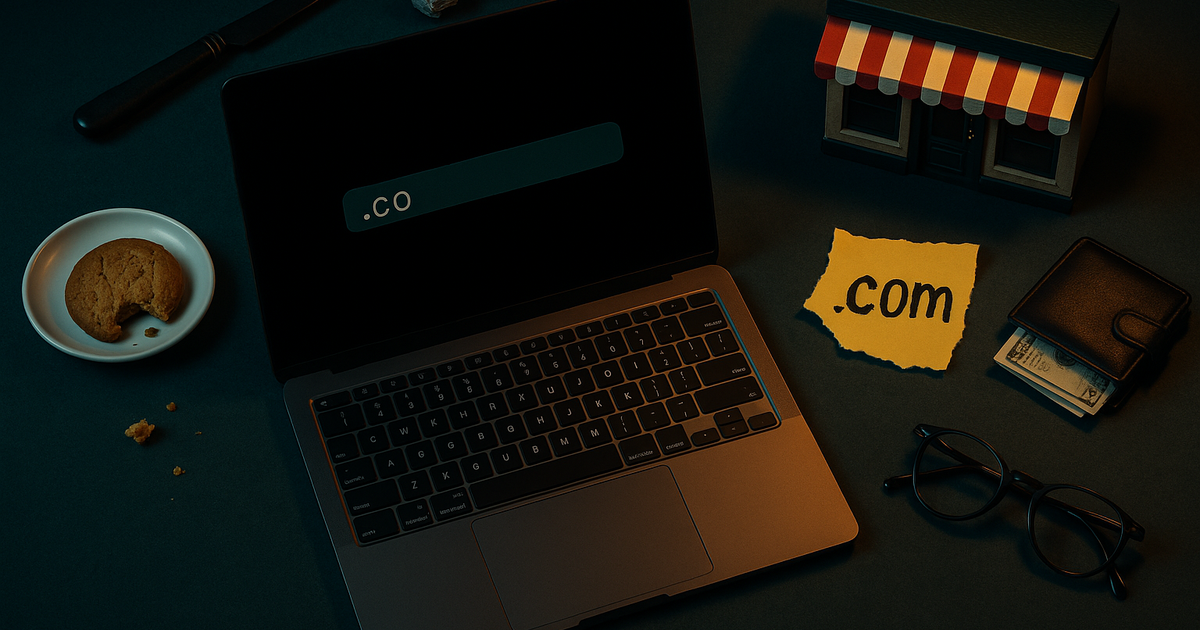
Here's a question we get a lot. You've got a site up already, but the name is a mouthful. Maybe it has a dash in it, or an odd spelling, or it ends in something other than .com. Now the clean .com you always wanted is available. You wonder: can you just buy it and point it at the site you already have?
Short answer: yes, you can. Buying the .com and setting up a redirect is easy, and sometimes it's the right call. But a redirect is a stepping stone, not a finish line. Let's walk through when it works, when it doesn't, and what to do instead.
What "buy the .com and redirect" actually means
A redirect is a rule that says: when someone types this name, send them somewhere else. So a customer types yourbusiness.com, and their browser quietly lands on your-old-business-site.net or whatever you're running now. The visitor gets to your site either way. The address bar changes to show where they ended up.
Setting one up takes a few minutes. Your registrar has a setting for it. So does most website software. It's cheap and it's reversible.
When a redirect is the right move
There are real reasons to buy the better name and redirect it, at least for now.
You want to lock in the name before you're ready to switch
Maybe your site is mid-project, or you just paid a designer, or you're heading into your busy season. You don't want to move everything today. Buying the .com and redirecting it means the name is yours and working, while you plan the real switch for a slower month.
You keep losing customers to a typo
If people hear your name and type the .com out of habit, only to hit a dead page or a competitor, a redirect fixes that overnight. Now the version customers naturally guess sends them to you.
You're protecting the name you say out loud
When you tell someone your business name on the phone or on a truck door, they hear a plain name. They don't hear "dot net" or the dash. They'll try the .com. Owning it and pointing it home closes that gap.
Where redirecting falls short
Here's the part most people miss. A redirect gets visitors to your site. It does much less for how you show up on Google, and nothing for how your business looks day to day.
Your email and your address bar still say the old name
A redirect only handles people who type the new .com. Your email is still yourname@old-hard-to-say-site.net. Your business cards, your invoices, your Google Business Profile, your Instagram bio — all still show the old name. Customers see the address they actually land on, which is the old one. So the messy name is still your public face.
Search engines follow the name you actually use
Google indexes the site where your pages live. If your real site is on the old domain and the .com just points to it, Google keeps treating the old name as your home. The clean .com doesn't build any standing of its own while it's only a redirect. You get the convenience, not the long-term benefit.
If getting found matters to you, that's the catch. A redirect is a shortcut for visitors, not a strategy for search.
Two names, twice the confusion
Run both for too long and people get unsure which one is real. Some bookmark the old one. Some share the new one. Reviews and links get split between them. It works, but it's never as clean as picking one name and standing behind it.
The better long-term move: make the good name your real home
If you like the .com enough to buy it, the stronger play is usually to make it your actual site, not a forwarder. That means your pages live on the .com, your email uses it, and the old name becomes the redirect — pointing at the new one, so nobody who has your old address gets lost.
Done right, this hands your standing to the new name instead of stranding it. You use a permanent redirect (a "301") from the old domain to the new one, so search engines understand you moved and pass along the credit you've built. Google explains how that works in their guide to redirects, and it's worth a two-minute read before you flip anything.
Moving a site sounds scarier than it is. For most small business sites, it's a weekend job, not a rebuild. We walk through the trade-offs of doing it now versus later in Upgrade Later or Buy Now, and what the messy name may be costing you in The Hidden Cost of Launching on a Non-.com Domain.
So, redirect or move?
Use a redirect when you want the name today and can't switch yet. Just treat it as a temporary bridge. Set a date to make the .com your real home, and until then, make sure the redirect is the permanent kind so nothing gets lost.
Don't leave it as a redirect forever. The whole reason a clean name is worth buying is that customers can say it, spell it, and find it. You only get all three when it's the name your business actually lives on.
Wondering what a better name would cost for your trade or your city? Browse names for your market, or send us one name you're eyeing and we'll tell you straight whether it's worth the switch. Takes about a minute.