Set Up 301 Redirects So Old Links Still Send You Customers
Switching to a better domain name? A 301 redirect makes sure old links, bookmarks, and Google results still land people on your new site. Here's how to do it right.
You bought a better name. Good. Now there's one job left that decides whether the move helps you or hurts you: telling the internet where your site went.
Here's the problem. For years, people have linked to your old site. Google has it in search results. Customers bookmarked it. Your name is printed on business cards and truck doors. If you just switch to the new name and shut the old one off, all of that turns into a dead end. Someone clicks, gets an error page, and calls the next company on the list.
A 301 redirect fixes this. It's the tool that lets you 301 redirect your old domain to a new domain without losing traffic. Let's walk through what it does and how to set it up so nobody falls through the cracks.
What a 301 redirect actually does
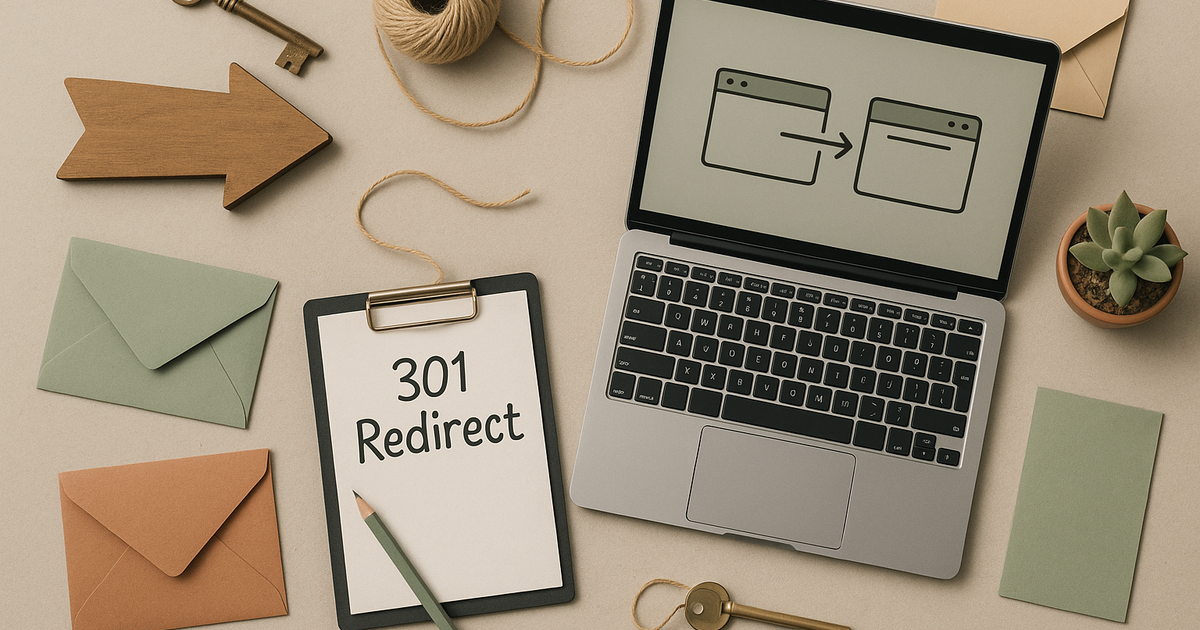
A 301 redirect is a permanent forwarding order. When someone tries to visit your old address, the 301 quietly sends them to the matching page on your new address instead. The visitor barely notices. Their browser lands where it should.
The "301" is a code that means "this moved for good." That last part matters. Google reads it as permanent, so it moves the trust and rankings your old pages earned over to the new ones. A different code, 302, means "moved for now" — and Google treats it that way, holding back. For a name change, you almost always want 301.
Redirect every page, not just the home page
This is the mistake that quietly kills traffic. People set up one redirect that sends the old home page to the new home page, then call it done.
But your old site wasn't just a home page. It had a services page, a contact page, maybe a blog post that ranks well, a page for each city or job you do. Every one of those has its own links pointing at it. If you dump all of them onto the new home page, you throw away everything those individual pages earned.
The rule is simple: match each old page to its new one.
- oldname.com/plumbing-repair → newname.com/plumbing-repair
- oldname.com/contact → newname.com/contact
- oldname.com/austin → newname.com/austin
Same page, new address. Do this for every page that got visits or has links. You can check which old pages matter in Google Analytics or Google Search Console before you start.
How to set the redirects up
You don't need to know code, but you do need to know where your site lives. There are a few common ways to do this, and the right one depends on your setup.
If you use WordPress, Squarespace, Wix, or Shopify
These platforms have redirect tools built in, or a plugin that handles it. You paste in the old path and the new one, and it does the rest. Search your platform's help pages for "301 redirect" and follow their steps. It's usually a copy-and-paste job.
If your site is on its own server
Your web developer or host can add the redirects in a file (often called .htaccess on common servers). This is the most reliable method for a whole-domain move because it can forward every old page in one clean rule. If you have a developer, this is a 20-minute task for them. Ask for a "301 redirect from the old domain to the new domain, keeping the same page paths."
If you're between hosts
Some domain registrars offer basic forwarding right in your account. It's fine for pointing the whole old name at the new home page, but it usually can't match page for page. Use it as a backup, not your main plan. Your registrar's help pages will tell you what they support — for example, GoDaddy's domain forwarding guide walks through their version.
Test before you trust it
Once the redirects are in, check them yourself. Open a few old page addresses in your browser. You should land on the matching new page with no error and no long delay. Try it on your phone too.
Google keeps a plain guide to site moves worth skimming: Google's documentation on moving a site with URL changes. It confirms the same thing — permanent redirects, page to page.
After you've tested, tell Google directly. There's a tool for that, and we cover it step by step in using Google's Change of Address tool.
Keep the old name alive
Redirects only work if the old domain keeps running. Don't cancel it. Keep it registered and paying for years, not months. As long as you own it, the old links keep working and keep sending you customers.
This trips up plenty of owners, and it's one of several ways a good move goes wrong. If you want the full list, read 5 ways small businesses lose traffic when they change domains before you flip the switch.
A short timeline of what to expect
Set up right, you won't see visitors drop off — they get forwarded the moment you're done. What takes time is Google catching up and swapping the old addresses for the new ones in search results. That usually settles over a few weeks. We break down the wait in how long before Google catches up after you switch domains.
Redirects are one piece of a clean move. Before you point anything anywhere, run through the checklist to run before you point your site to a new name so nothing gets missed.
Thinking about a better name in the first place? Browse names for your city or trade, or ask us about one specific domain — it takes under a minute, and there's no pressure to decide today.