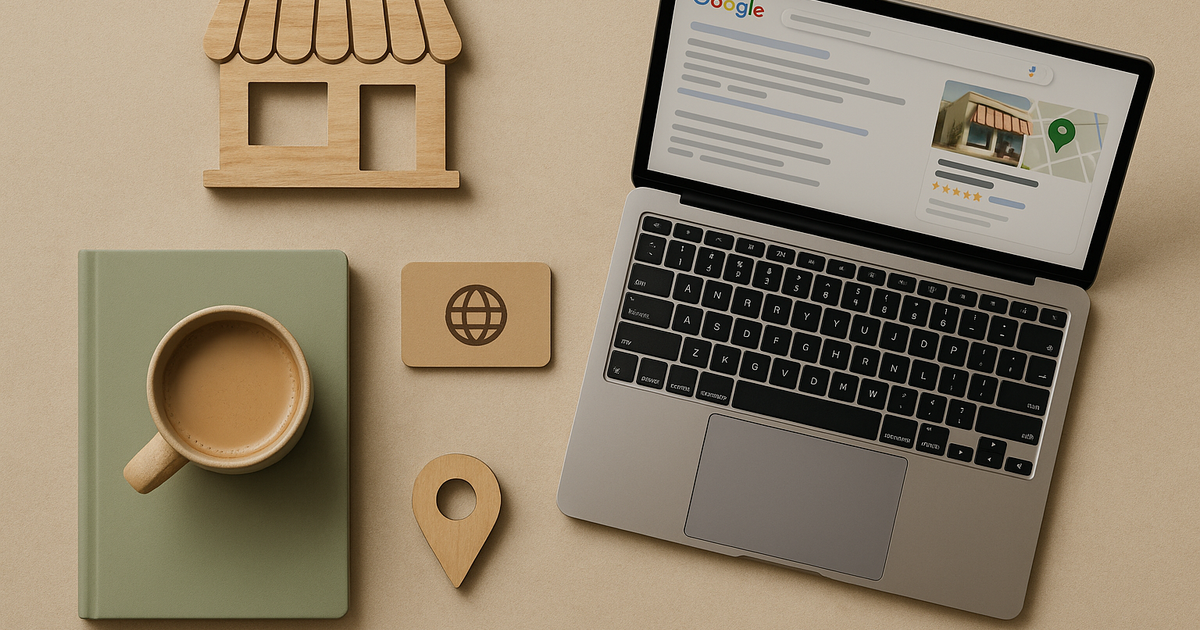

Why Google Shows Your Profile for Some Searches and Your Site for Others
Sometimes Google shows your Google Business Profile. Sometimes it shows your website. Here's what decides which one, and why you want both working for you.
Search your own business on Google and you'll notice something. Sometimes the first thing you see is a map box with your name, hours, and reviews. Other times it's a plain blue link to your website. Same business, two different results.
People ask us about this all the time. They want to know which one Google "likes better," and whether they should even bother with a website if their profile shows up first. That's the real question behind Google Business Profile vs website in local search results. The short answer: Google isn't picking a favorite. It's picking whichever one answers the search.
Google reads the search, not just the business
Every time someone types something into Google, Google is trying to guess what they actually want. The words they use tell Google a lot.
Think about two people looking for a plumber in Fort Worth.
- One types "plumber near me open now."
- The other types "how much does it cost to replace a water heater."
The first person wants to call someone today. Google shows the map box and profiles, because those have phone numbers, hours, and reviews right there. The second person wants to read and learn. Google shows web pages, because a profile can't explain water heater pricing.
So the split isn't random. It follows the intent behind the words.
Searches that usually pull up profiles
- "near me" searches
- Anything with a place name — "dentist in San Antonio"
- "open now," "hours," "phone number"
- Your business name typed directly
Searches that usually pull up websites
- Questions — "how," "why," "what's the difference"
- Detailed service searches — "cost to rewire an old house"
- Comparison searches — "tankless vs tank water heater"
- Anything a short profile can't answer in a sentence
Your profile and your site do different jobs
A Google Business Profile is great at one thing: getting a ready-to-buy customer to contact you fast. Name, map, reviews, a call button. That's it. That's the job.
But it hits a wall quickly. You can't explain your process on it. You can't show ten years of finished work. You can't rank for the dozens of questions your customers ask before they're ready to call. Your website does all of that, and it does it under a name you control.
We wrote a whole post on this gap — what your Google Business Profile can't do that your domain can. The point is simple. These two things aren't competing. They cover different parts of how a customer finds and trusts you.
Why you want both, not one
Here's what happens when you only have a profile and no real site.
You show up for "electrician near me." Good. But you're invisible for "do I need a permit to add an outlet in Dallas" — and the electrician who wrote a clear page about that just got a reader who's about to become a customer. You never had a shot, because you had nothing for Google to show.
It works the other way too. A great website with no profile means you miss the fast, ready-to-call searches. You need both lanes open.
If you're weighing whether a site is even worth it, we cover that here: do you still need a website if you have a Google Business Profile?
Your domain name ties it all together
Here's the part most people miss. Your profile links out to your website. When someone finds you on the map, taps your link, and lands on a site with a clear, matching name, they trust it. When the link goes to something long and hard to read, they hesitate.
Google notices that too. It wants the profile and the website to line up — same business, same name, same address. When they match, both show up more often and more confidently. We broke this down in matching your business name, domain, and Google profile.
So the website field on your profile isn't a small detail. It's the handoff. If you're not sure which address belongs there, read which domain should you put on your Google Business Profile.
What this means for you
Stop thinking of it as profile or website. Google will keep showing whichever one fits the search. Your job is to make sure both are ready.
- Claim and fill out your Google Business Profile. Google's own setup guide walks you through it.
- Point that profile at a website on a name customers can say and spell.
- Put pages on that site that answer the real questions people search — the ones a profile can never answer.
When those three things agree, you catch the fast searches and the slow ones. You show up in the map box and in the blue links. That's the whole game.
If you already have a site but the name is long or hard to say, moving to a cleaner one is easier than most people think — and it doesn't have to break your Google rankings. See how to update your Google Business Profile when you change domains.
Not sure a better name is worth it? Take a minute and browse names for your city or your trade — or send us one name you're curious about and we'll tell you straight whether it's a good fit. No pressure either way.