Do Old Backlinks Survive an Ownership Change—or Decay?
When you buy an aged domain, its backlink profile doesn't transfer intact. Here's what survives an ownership change, what quietly decays, and how to vet the link equity you're actually paying for.
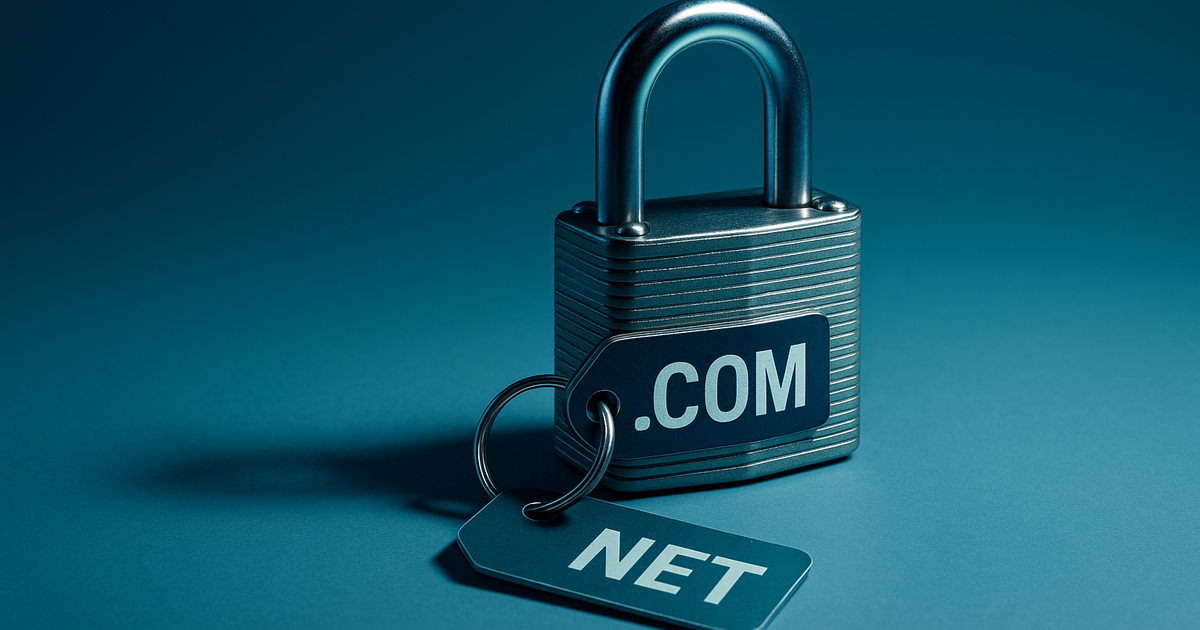
Every aged-domain pitch leans on the same promise: you're not just buying a name, you're buying the backlinks pointing at it. Years of accumulated links, ready to funnel authority into whatever you build next. It's a compelling story—and it's partly true. But aged domain backlink decay after purchase is real, predictable, and often underestimated by acquirers who price a domain on its historical link count rather than its surviving link equity.
The distinction matters because backlinks are not a fixed asset welded to a domain. They're references living on other people's servers, subject to those people's decisions, their hosting bills, and the passage of time. When ownership changes hands, some of those references hold, some erode, and some actively work against you. Knowing which is which is the difference between a smart acquisition and paying premium money for a profile that's quietly emptying out.
What actually transfers when you buy the domain
Here's the reassuring part: a backlink is a link on someone else's page pointing to yours. That HTML doesn't know—or care—who owns the destination domain. If example.com linked to your newly acquired domain in 2019, that link keeps pointing at the same URL after you take over registration. Ownership changes at the registrar don't touch third-party pages.
So in the narrow, technical sense, the links survive. What changes is everything around them—and that's where value leaks out.
The four ways link equity quietly decays
Backlink decay isn't one event. It's a slow tax applied through several independent mechanisms, most of which have nothing to do with the ownership change itself and everything to do with time and context.
1. Natural link rot
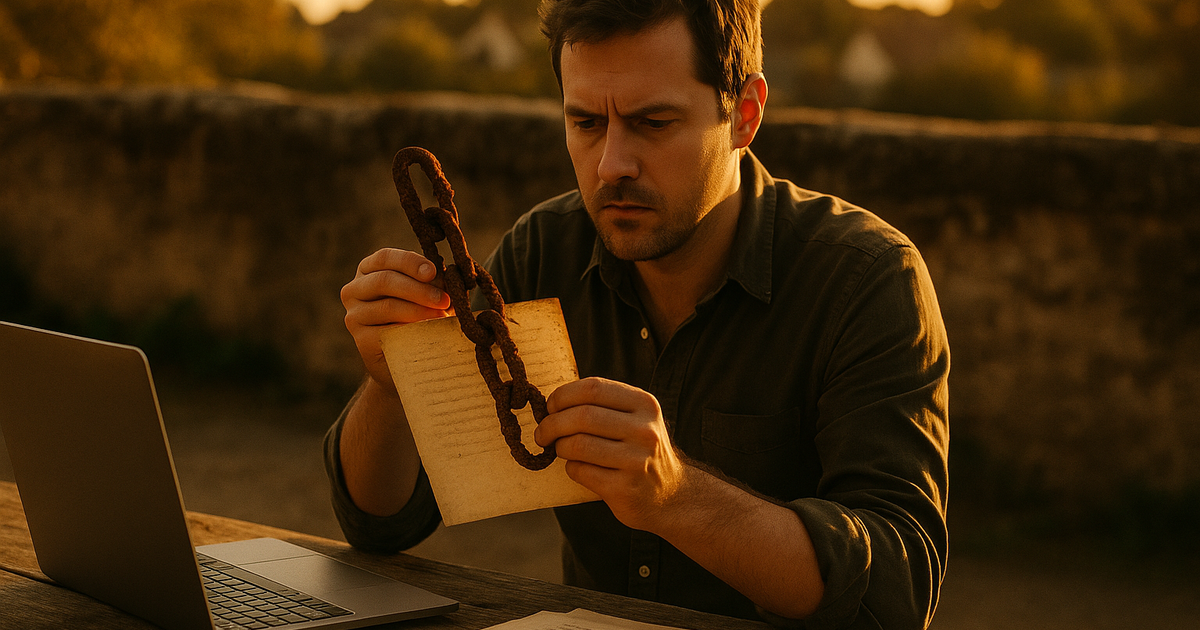
The web is not permanent. Blogs get abandoned, publications restructure their URLs, companies fold, and pages 404 out of existence. Studies on link rot consistently show that a meaningful share of any older link profile simply stops existing over a span of years. If the domain's authority was built on links from 2015-era blogs and forums, expect a chunk of those referring pages to already be gone—and more to disappear on their own schedule, regardless of what you do.
2. Redirect and content changes on your end
The most self-inflicted form of decay happens when the new owner rebuilds the site. A backlink pointing to /products/widget-pro only passes equity cleanly if that URL still resolves to relevant content or is redirected properly. Launch a new site with a different URL structure and no redirects, and every deep link now hits a dead end. The link still exists on the referring page, but it's pointing into the void.
3. Loss of topical relevance
Search engines increasingly weigh whether a link makes contextual sense. If a domain earned links as a regional design resource and you relaunch it as a fintech brand, those old links now point from decor and lifestyle contexts into a financial site. The link survives; its relevance signal collapses. This is one of the most overlooked forms of decay because it doesn't show up as a broken link—it shows up as authority that no longer counts for much.
4. Re-evaluation after an ownership signal
Search engines watch for the fingerprints of a domain changing hands—an abrupt shift in content, purpose, contact details, or a lapse in registration. When those signals appear, historical trust doesn't automatically carry forward. The engine may re-assess the profile from a more skeptical posture, discounting links that were previously credited. This is the mechanism most acquirers ignore, and it's why a domain's live authority metrics can drift downward in the months after a relaunch.
What survives well—and what to be skeptical of
Not all links decay at the same rate. Some categories are genuinely durable:
- Links from stable, high-authority publishers — news outlets, universities, government pages, and established industry sites tend to keep their URLs live for years and are unlikely to remove a link just because a destination changed hands.
- Editorially earned, in-content links — a link embedded in a well-read article is more durable than a footer or sidebar link, both in survival and in the weight it carries.
- Links that stay topically consistent with your new use — if you keep the domain in roughly the same niche, relevance is preserved and decay slows dramatically.
And some are worth heavy skepticism:
- Directory, comment, and forum links — cheap to acquire historically, quick to disappear, and lightly weighted to begin with.
- Links from sites that themselves have declined — a link from a domain that has since lost its own authority passes little.
- Anything that looks manipulated — link networks, exact-match anchor floods, and paid schemes are liabilities, not assets. If the profile carries penalty risk, decay is the least of your concerns.
How to vet surviving equity before you buy
Treat the backlink profile the way you'd treat a rent roll on a commercial property: don't take the gross number at face value—underwrite the durable, occupied portion. A practical due-diligence pass looks like this:
- Pull the live profile, not the historical one. Use a backlink tool and filter for links that currently resolve. The gap between historical and live counts is your first decay estimate.
- Segment by referring-domain quality. A handful of durable, authoritative referring domains outweighs thousands of thin ones. Concentrate your valuation there.
- Check topical fit against your intended use. If you're changing the domain's purpose, discount links whose context won't survive the pivot.
- Screen for penalty signals. An unnatural profile can drag a domain down rather than lift it. This is worth a dedicated pass—see Domain History Red Flags: Spotting Penalties Before You Buy for what to look for.
- Reconstruct the history. Understanding how and when links were earned tells you whether they're organic and durable or manufactured and fragile. Start with How to Check a Domain's Age and Full Registration History.
You can cross-check registration mechanics against ICANN's registration data lookup to confirm the ownership timeline you're being told matches reality.
Backlinks are one input, not the whole thesis
It's worth keeping perspective. A surviving backlink profile is a genuine head start, but it's not a ranking on autopilot. The links you inherit interact with content quality, technical health, and how cleanly you preserve continuity through the transition. If you're weighing how much of the acquisition case should rest on link equity versus what you build afterward, Domain Age vs. Content Quality: Which Actually Moves Rankings? and Does Buying an Aged Domain Give You an SEO Head Start? both frame the trade-off honestly. And if you're still deciding between an aged versus expired asset, Aged Domains vs. Expired Domains: What Acquirers Should Know lays out the distinctions that change how link equity behaves.
The pragmatic takeaway: old backlinks don't vanish when a domain changes hands, but they don't transfer at full face value either. Rot, redirects, relevance shifts, and re-evaluation all take a cut. Price the profile on what survives and stays relevant to your plan—not on the historical headline number.
If you'd rather evaluate names whose history has already been vetted, browse the PixelWorks Domains inventory, or reach out about a specific acquisition. We're happy to talk through what a domain's link profile actually holds—and what it's worth once the decay is priced in.